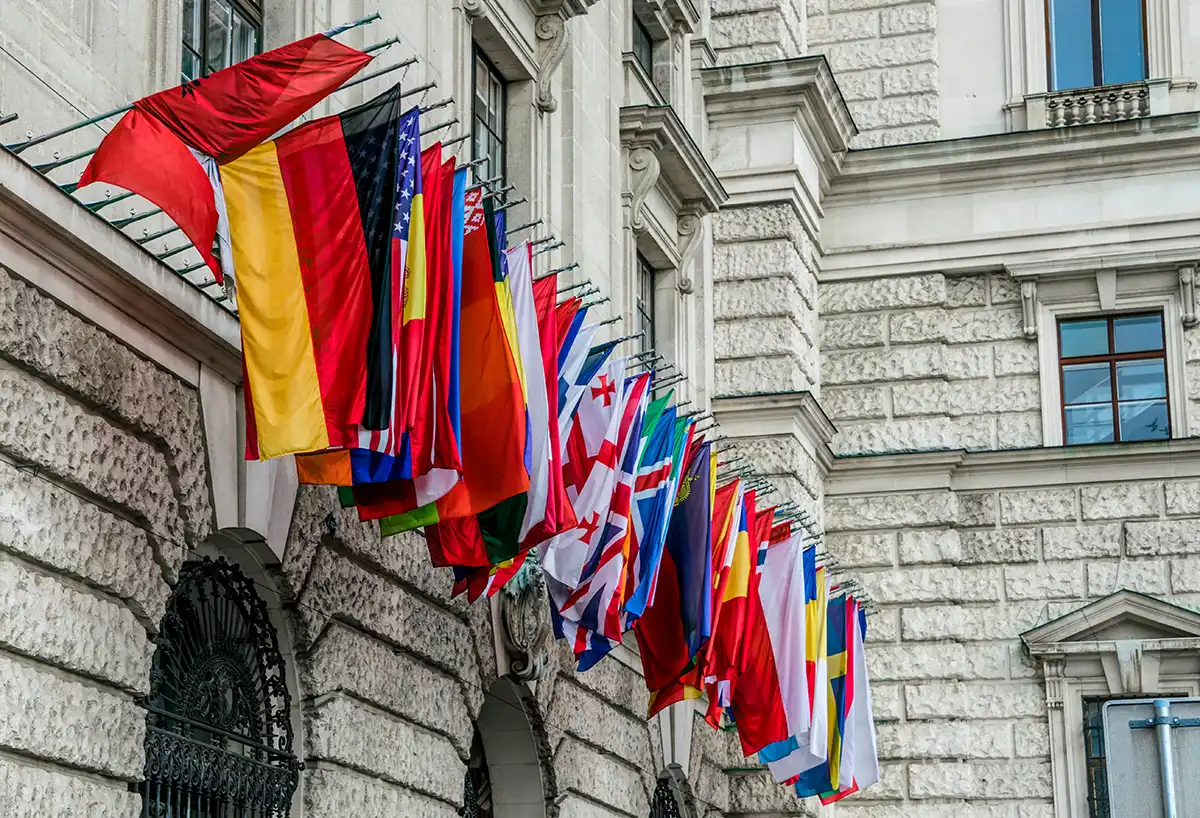
New Zealand's Ministry of Foreign Affairs and Trade — Manatū Aorere — runs roughly 60 embassies, high commissions, consulates-general and permanent missions worldwide. A small foreign service by G7 standards, but punching well above its weight in the Pacific, in trade diplomacy, and in multilateral fora where New Zealand's voice has long carried more authority than the country's size would suggest. Joining MFAT through the Foreign Policy Officer programme means accepting a working life of three- to four-year postings, decided largely by the Ministry, across a network calibrated around the Trans-Tasman relationship, Pacific Islands engagement, Five Eyes cooperation, and Asia-Pacific trade.
Most public conversation about a diplomatic career fixates on the salary. That's understandable — MFAT pay scales are public, and the word "ambassador" carries enough prestige that people expect the paycheck to match. The reality is more layered. Foreign Policy Officer entry pay is modest by Auckland or Wellington private-sector standards. Senior tiers rise meaningfully. Heads of mission earn well, but rarely at multiples of what comparable qualifications would attract in tech, in management consulting, or in the legal profession. And the most important part of the compensation never appears on any MFAT pay scale.
That gap between the public image and the actual answer is where this gets useful for anyone seriously thinking about MFAT: what does a New Zealand diplomat actually earn, and which postings genuinely shape an MFAT career?
What a New Zealand diplomat actually earns
New entrants to MFAT typically join through the Foreign Policy Officer (FPO) programme. Entry-level FPO pay sits at roughly NZD 68,000 to NZD 75,000 a year on the home base — solid for a New Zealand public service entry-level role, comfortably below what an equivalent qualification might attract at one of the Big Four, at a Wellington-based tech firm or in Auckland's legal market. It is not the figure most readers associate with the word "ambassador."
Career progression runs through mid-level Foreign Policy Officer (NZD 85,000 to NZD 100,000) and senior policy roles (NZD 120,000 to NZD 140,000) into management and head-of-mission appointments. The figure that surprises most readers comes here: New Zealand ambassadors and high commissioners start at around NZD 92,000 a year, with the most senior diplomats at MFAT reaching above NZD 200,000. On top of base pay, MFAT operates an offshore conditions framework — cost-of-living allowances for expensive posts, hardship allowances for difficult postings, dependent education provisions, housing supplied or subsidised — that can substantially change the financial picture on the right posting.
But the most interesting part of this compensation never appears on a payslip. The real "pay" of an MFAT career is structural: a working life across five to seven posts, mostly in the Pacific, Asia and the Anglosphere; a child raised in three languages; the access that comes from representing New Zealand in rooms where Pacific, Five Eyes, and trade decisions are made; the long-tail influence of having served at posts that, in a small foreign service, quietly shape Wellington's foreign-policy community for decades. That form of compensation explains, more than any pay scale, which MFAT postings are quietly sought after.
- Strategic weight for New Zealand foreign-policy, security, and trade interests — including Pacific Islands and Indo-Pacific files
- Visibility from Wellington — work that's read at MFAT HQ in the Beehive and DPMC accelerates a career
- Quality of life on post: housing, schools, climate, medical access and family fit
- Language and operational complexity — Mandarin, Indonesian, Japanese, and Korean posts attract incentive payment and compounded workload
- Hardship and security profile: harder postings attract MFAT allowances at the top of the scale and disproportionate career-shaping value

Which MFAT postings get fought over rarely comes down to base pay alone. Mandate, representation, daily life and operational pressure carry far more weight.
LIGHTFIELD STUDIOS / Adobe Stock
The Trans-Tasman relationship is New Zealand's closest, oldest and most operationally dense — and Canberra is the post that runs it.
If there's a single MFAT post whose importance is obvious, it's the New Zealand High Commission in Canberra. The Trans-Tasman relationship runs deeper than any other New Zealand bilateral: the Trans-Tasman Travel Arrangement; the Closer Economic Relations free trade agreement; the integrated defence and intelligence cooperation under ANZUS and Five Eyes; and the largest community of New Zealanders living abroad, scattered across every Australian state.
What makes Canberra demanding for a New Zealand diplomat is the density. Every Wellington policy question — economic, security, social — has an Australian dimension that has to be coordinated almost in real time. The High Commission is supported by Consulates-General in Sydney, Melbourne, Brisbane and Perth, and the consular workload alone reflects the size of the Kiwi expatriate community. The political and trade workload runs alongside it constantly.
For an MFAT career, a tour at the Canberra High Commission is the kind of assignment that quietly defines what comes next. The work is read in Wellington daily, the bilateral relationship matters to every successor in the role, and the operational reality of Trans-Tasman cooperation gives officers experience that no other posting in the network can replicate.
Five Eyes, ANZUS, AUKUS-adjacent — Washington is the post New Zealand's most senior diplomats build careers around.
The New Zealand Embassy in Washington sits on Observatory Circle in Embassy Row, and it is the senior post in MFAT's network in the Americas. The bilateral relationship with the United States runs across Five Eyes intelligence cooperation, ANZUS-adjacent defence engagement, the New Zealand-United States Free Trade Agreement framework (under negotiation in various formats), and the substantial bilateral file on Pacific Islands strategy and Antarctic policy.
What makes Washington a career-defining post for an MFAT officer is what's true of every foreign service's Washington tour: visibility from the home capital is constant, the political tempo of US administrations reshapes the file every four years, and the access to a globally consequential foreign policy ecosystem compounds across a career. The Embassy is supported by New Zealand Consulates-General in New York and Los Angeles, which together carry the trade and commercial work in the US's largest economic centres.
Inside MFAT, Washington is one of the few posts that almost every senior diplomatic career references in some form. It is not a quality-of-life tour — the workload, the visibility from Wellington and the operational pace are demanding — but the file weight and the long-tail career value make it one of the network's most-sought postings.
China is New Zealand's largest trading partner — and Beijing is the post that runs the politically intricate side of that relationship.
The New Zealand Embassy in Beijing runs the bilateral relationship with one of New Zealand's most consequential trade partners — particularly in dairy, meat, forestry and education services. China has been New Zealand's largest goods trading partner for a decade, and the Embassy works inside that economic significance alongside a political file that has grown more demanding as Five Eyes alignment on China policy has sharpened. The Embassy is supported by New Zealand Consulates-General in Shanghai, Guangzhou and Hong Kong.
What makes Beijing demanding for a New Zealand diplomat is the layering. The trade-and-investment file runs on its own complex calendar; the political file requires constant calibration as the broader Indo-Pacific strategic environment evolves; consular work covers the substantial Chinese-New Zealander community and Kiwis transiting China; and the operating environment in Beijing itself — air quality, surveillance pressure, restricted mobility — adds its own daily friction.
For an MFAT career, a Beijing tour is one of the most career-defining assignments in the network. Mandarin proficiency carries a language allowance and a long-term career premium. The visibility from Wellington is high, and the file weight reshapes what comes next more reliably than almost any other posting MFAT offers.
India is the country whose relationship with New Zealand has shifted shape most in the last decade — and the New Delhi High Commission runs the growth.
The New Zealand High Commission in New Delhi sits on Sir Edmund Hillary Marg in Chanakyapuri — a road named after the New Zealand mountaineer whose 1953 Everest summit became a defining moment in the bilateral relationship. The mission runs the India bilateral file and is cross-accredited to Nepal, supported by New Zealand Consulates-General in Mumbai and Chennai. The relationship has shifted dramatically: the Indian-New Zealand diaspora is one of the fastest-growing in the country, education-services trade is substantial, and the wider Quad-adjacent strategic environment makes India one of MFAT's most operationally interesting growth posts.
What makes New Delhi distinctive professionally is the scale. India is the kind of country at which small-foreign-service officers grow disproportionately — the bilateral file rewards officers who can absorb large complexity, manage multiple workstreams at once (trade, education, defence, technology, diaspora, Edmund Hillary legacy work in Nepal), and represent New Zealand inside a political ecosystem that operates by different rules than the New Zealand one.
The fact that the mission carries the formal title of High Commission — the Commonwealth convention for diplomatic representation between member states — doesn't change the underlying career reality. It functions for all practical career purposes as an embassy, and the work is among the most substantive in the MFAT network.
Latin America's largest country, a fellow Southern Hemisphere agricultural exporter, and the Embassy that anchors New Zealand's footprint in South America.
The New Zealand Embassy in Brasília is one of MFAT's most editorially interesting posts. Brazil is Latin America's largest country, one of the BRICS economies, and a Southern Hemisphere counterpart to New Zealand on a long list of files — agricultural exports (where the two countries both compete and cooperate as major dairy, meat and forestry producers), climate and biodiversity, the Antarctic Treaty system, and the wider multilateral file in the UN system.
What makes Brasília distinctive for an MFAT officer is the variety. The Embassy combines bilateral political and trade work with regional reach — neighbouring South American states fall under wider New Zealand cooperation frameworks, and the post acts as MFAT's principal listening station on a continent where New Zealand's presence is otherwise modest. Portuguese-language capability carries professional weight; the cultural learning curve is real but rewarding.
Inside MFAT, Brasília is not the conventional career-marker posting that Washington or Canberra are. But it is the kind of tour that produces officers with a genuinely global profile — and for a small foreign service that has invested heavily in the global-trade and multilateral-diplomacy strands of its identity, that profile is more career-relevant than its public visibility suggests.
Embassy, high commission, consulate-general and honorary consulate are not the same MFAT career experience
Anyone considering MFAT should understand the difference between embassy, high commission, consulate-general and honorary consulate postings. Embassies and high commissions are operationally similar — the high-commission title is the Commonwealth convention for diplomatic representation between member states — and on the MFAT career path the work is comparable. Consulates-general focus on consular operations, trade promotion and regional engagement under a Consul-General. Honorary consulates are part-time appointments, typically held by a private citizen of the host country, and are not part of the MFAT career path.
What changes with the type of mission is the work, the leadership responsibility, and the visibility from Wellington. An ambassadorial or High Commissioner role at a major mission combines political representation, the management of all sections of the mission, and direct interlocution with the host government. Heads of consular operations at a Consul-General level run citizen services and regional engagement — a different but equally substantive leadership track.
For anyone moving from general interest into concrete career planning, the page on the diplomatic career is a useful next stop.
Manatū Aorere — Ministry of Foreign Affairs and Trade
The official MFAT site. Bilateral relationships, New Zealand's embassies, high commissions and consulates worldwide, consular services, and the foreign-policy priorities that shape what a posting actually involves.
Work with us — MFAT
Official MFAT careers page. Foreign Policy Officer programme entry route, intermediate opportunities, specialist careers, and the conditions of service that apply to staff posted overseas.
The Foreign Policy Officer role — MFAT
Official MFAT page on the Foreign Policy Officer role. Entry requirements, application process, training, and the career path from FPO through senior diplomatic ranks.
Foreign Policy Officer — Careers.govt.nz
Official Careers New Zealand profile of the Foreign Policy Officer role: pay ranges, entry pathways, day-to-day work and progression to senior diplomatic positions.
“The real compensation in a New Zealand diplomatic career doesn't appear on any MFAT pay scale. It shows up in the places you've lived, the relationships you've built, and the question of which postings Foreign Policy Officers actually compete for inside the Ministry when the salary stops being the criterion.”
If the criterion is the operationally densest bilateral relationship MFAT runs, Canberra is the clearest case in this selection. If it's the global Anglosphere posting that signals seniority in any foreign service, Washington is hard to overtake. If it's the trade relationship that defines New Zealand's largest single export market and the most politically complex part of the network, Beijing is the post that captures it. If it's the relationship that has shifted shape fastest in the last decade, New Delhi is the High Commission to watch. And if the criterion is the kind of distant, substantively interesting post that builds a globally-rounded MFAT career, Brasília earns its place.
Read this way, the question that started this article — what does a New Zealand ambassador earn — turns out to be the wrong frame. The right question is which postings an MFAT officer would actually fight for inside the Ministry if pay scale weren't the criterion. The real compensation in this career is not the monthly base; it's the sum of the places lived, the relationships built, and the rooms where, for a few years at a time, a New Zealand diplomat was the voice of Aotearoa.