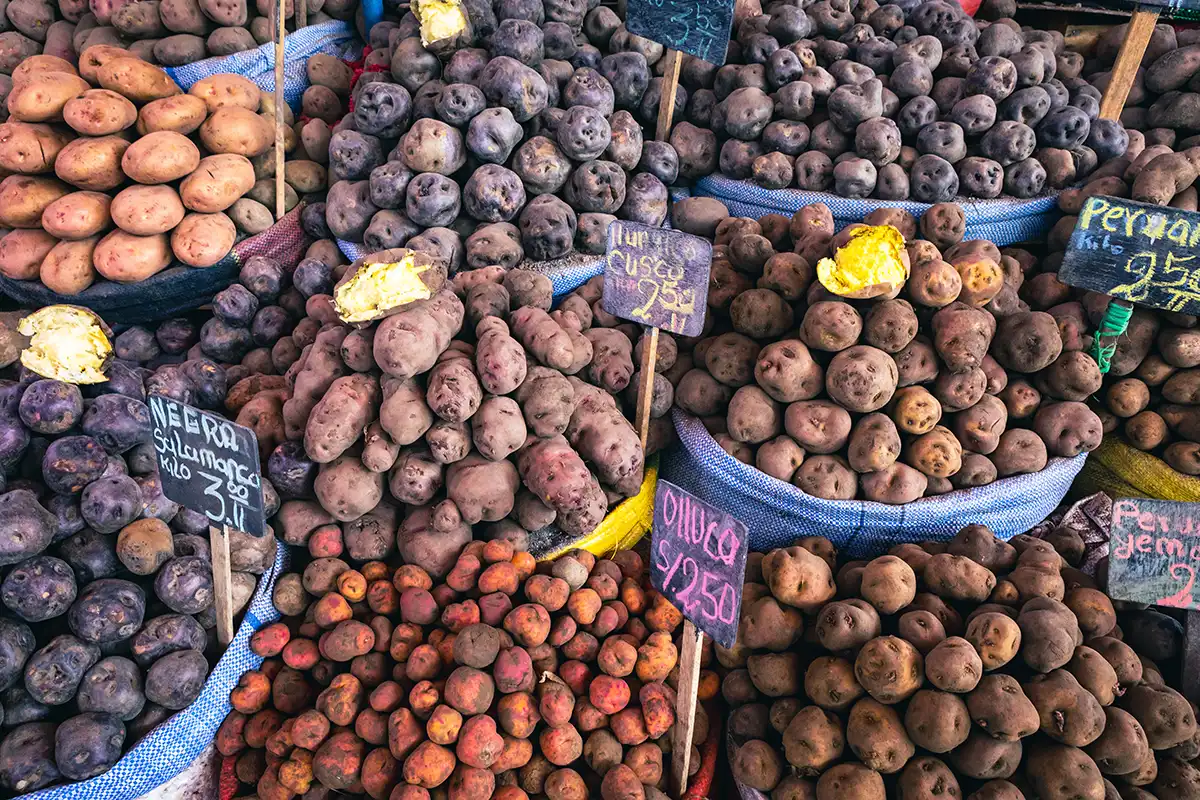
Every chip, every kūmara mash, every Sunday roast spud on a New Zealand table starts with the same ingredient. The potato. And the potato is Peruvian. Not symbolically, not approximately — the potato was domesticated in the Andes of present-day Peru and Bolivia somewhere between 8,000 and 10,000 years ago. The Quechua and Aymara peoples grew it, bred it, freeze-dried it into chuño for storage at altitude, and developed hundreds of distinct varieties adapted to the extreme range of climates across their world.
Europe only got the potato in the 16th century, via Spain. Before that, much of the continent ran on grains. The potato transformed European agriculture, demography, and cuisine so profoundly that it is almost impossible to imagine the modern Western diet without it.
You would think a country that gave the world one of its foundational ingredients would be known for its food. For most of the 20th century, Peru was not. Then something shifted.
The Ingredient That Changed the World
The Peruvian Andes are not a monoculture. The altitude range — from sea level on the Pacific coast to over 6,000 metres in the cordillera — creates extraordinary ecological diversity within a small lateral distance. The Quechua cultivated this diversity deliberately, developing varieties suited to specific microclimates: some freeze-tolerant for the high puna, some starchy for boiling, some waxy for soups, some intensely flavoured for ritual use. Today over 3,000 native potato varieties are documented in Peru. The Centro Internacional de la Papa in Lima maintains a genebank holding more than 4,500 accessions.
This is not agricultural trivia. It is the foundation of Peruvian food culture. A cuisine built on such biodiversity — potatoes in hundreds of forms, plus quinoa, kiwicha, maize in dozens of varieties, dozens of types of chilli, cacao, and ingredients found only in the Amazon basin — has a depth of raw material that most culinary traditions simply do not have access to.
The dish that captures this most directly is causa limeña: layers of cold mashed potato blended with ají amarillo (Peru's defining yellow chilli), lime, and olive oil, filled with avocado, chicken, or seafood. It looks simple. Every component comes from Peruvian soil. The flavour is unlike anything achievable outside of it.
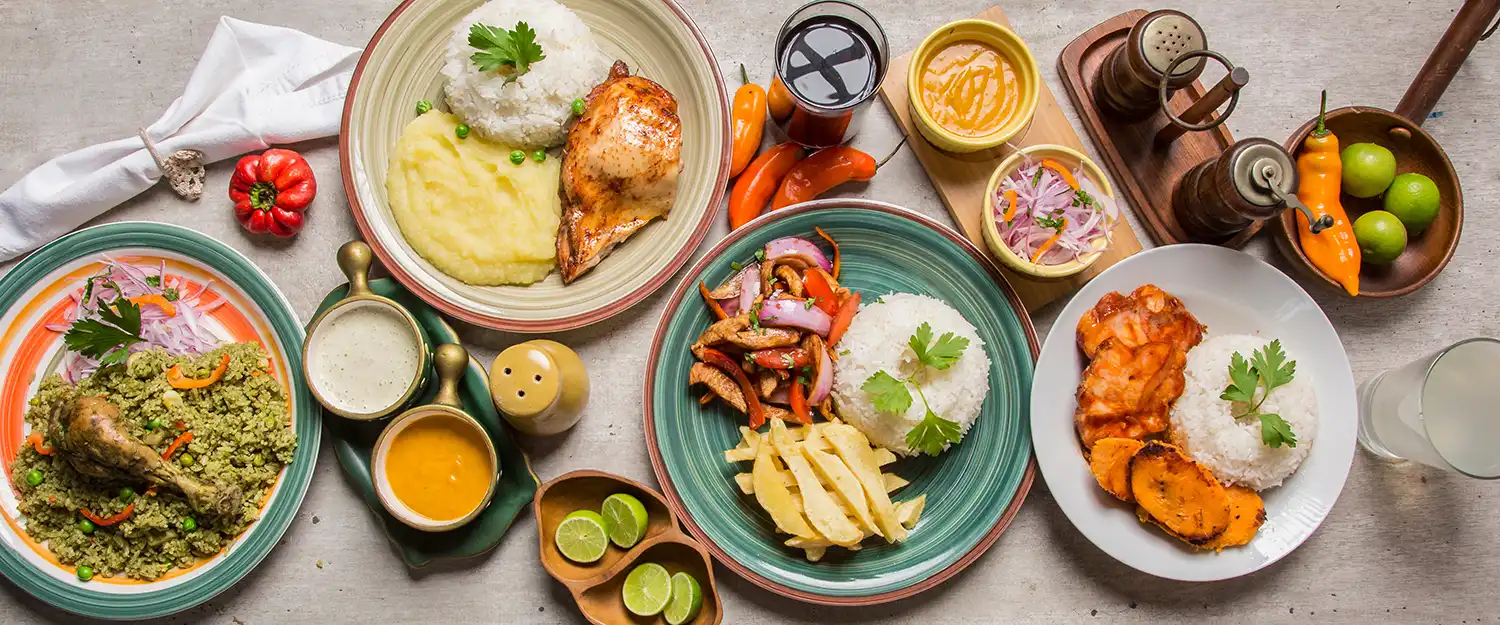
Peruvian cuisine draws on Andean, Spanish, African, Japanese and Chinese influences — and ends up belonging to none of them, only to Peru.
natrocfort / Adobe Stock
Lima: How a City Became a Food Capital
The turning point has a name: Gastón Acurio. In the early 2000s, Acurio — a Lima-born chef trained in Paris — returned to Peru and made a decision that sounds simple but was, at the time, genuinely radical. He decided to cook Peruvian food. Not French food with Peruvian ingredients. Not fusion. Peruvian food, treated with the same seriousness, technique, and ambition that European fine dining had always assumed was its exclusive territory.
Astrid y Gastón, his flagship restaurant in San Isidro, became the anchor of a movement. Acurio opened dozens of restaurants in Lima and internationally, and more importantly, he trained a generation of chefs who understood the project: that Lima had the ingredients, the culinary history, and the cultural depth to stand alongside any food capital in the world. Virgilio Martínez took it further. Central, his restaurant in Miraflores, has been named the world's number one restaurant by the World's 50 Best Restaurants list.
New Zealand and Peru are both Pacific countries, and they share more than the ocean. The kūmara (sweet potato) — central to Māori food culture — almost certainly travelled from South America to Polynesia before European contact, a transfer most archaeologists now place in the historical record. That shared botanical thread, plus a similar instinct for fish-led, acid-bright cooking, makes Peruvian cuisine arrive on Kiwi palates with less surprise than it might.
- 1Ceviche: Raw fish cured in lime juice, tossed with sliced red onion, ají amarillo, and coriander. Served cold with choclo (giant Andean maize) and sweet potato. The marinade — leche de tigre, tiger's milk — is the flavour signature: acidic, spicy, and oddly reviving. Peru's national dish.
- 2Lomo Saltado: Beef stir-fried at high heat with tomatoes, yellow peppers, red onion, soy sauce, and vinegar, served with fries and rice. The Chinese influence is explicit — chifa cooking, the Peruvian-Chinese fusion that developed from 19th-century Cantonese immigration. The wok technique is Chinese; the peppers, the potatoes, the combination of rice and fries on the same plate are entirely Peruvian.
- 3Ají de Gallina: Shredded chicken in a sauce of ají amarillo, bread, walnuts, and cheese, served over boiled potatoes with a hard-boiled egg. One of the dishes that most clearly shows the Spanish colonial layer in Peruvian cuisine — the technique is medieval European stew, the chilli is Andean, the result is wholly its own thing.
- 4Causa Limeña: Cold terrine of mashed potato seasoned with ají amarillo and lime, layered with fillings — avocado, tuna, chicken, or crab. Served as a starter or a light main. The contrast of the cold potato and the filling temperature is specific and deliberate. A dish that cannot be replicated without the right potato.
- 5Anticuchos: Grilled skewers of beef heart marinated in vinegar, cumin, and ají panca (a dark, smoky Peruvian chilli). Street food in origin, cooked on charcoal grills on Lima's pavements. The African layer of Peruvian cuisine is direct — the technique of grilling offal over coals reached Lima through African colonial-period influence. Now a national snack.
- 6Tiradito: Thinly sliced raw fish dressed with leche de tigre — similar to ceviche but without the onion, and with the Japanese sashimi cutting technique clearly evident. The Nikkei influence. Where ceviche is rustic and acidic, tiradito is elegant and precise.
- 7Pisco Sour: Pisco (grape brandy distilled in the Ica region), fresh lime juice, egg white, sugar syrup, and Angostura bitters. The national cocktail. Frothy, tart, and strong. The foam comes from shaking the egg white vigorously — the bitters are the finish, dropped on top.
Central
Virgilio Martínez. Miraflores. Tasting menus organised by altitude — Pacific floor to high Andes — built on Peru's ecological diversity. Named the world's number one restaurant on the World's 50 Best list.
Maido
Mitsuharu 'Micha' Tsumura. Miraflores. The benchmark for Nikkei cuisine — the Japanese-Peruvian fusion born from 19th-century immigration. Consistently ranked among the world's top restaurants.
Astrid y Gastón
Gastón Acurio. San Isidro. The restaurant that started the movement — and the proof, in the early 2000s, that Peruvian cuisine belonged on the global fine-dining stage.
Kjolle
Pía León. Barranco. Plant-led tasting menus from one of the chefs who built Central, now running her own restaurant with the same commitment to Peruvian biodiversity.
Mil
Virgilio Martínez. Moray, Sacred Valley near Cusco. An Andean-altitude restaurant and research project at 3,500 m — the most ambitious expression of the altitude-and-biodiversity argument.
Three Countries' Worth of Ingredients in One
Most national cuisines draw from one or two ecological zones. Peruvian food draws from three entirely distinct ones — and they share almost no ingredients.
The coast gives Peru the ocean. Pacific fish and shellfish in extraordinary variety, the cold Humboldt Current driving one of the world's most productive marine ecosystems. Ceviche, tiradito, arroz con mariscos, chupe de camarones — this is the coastal tradition, tied to the sea and to the Chinese and Japanese immigration that came through Lima's port.
The sierra — the Andean highlands — gives Peru the potatoes, the quinoa, the maize, the chillies, the guinea pig (cuy), the alpaca, the kiwicha. This is the Inca kitchen, the oldest layer of Peruvian food culture, where freeze-drying and fermentation were practised at altitude for millennia before European contact.
The selva (the Amazon) gives Peru ingredients that barely exist in Western culinary consciousness: cocona (a jungle fruit with tomato-like acidity), camu-camu (the world's highest vitamin C concentration of any fruit), patarashca (fish wrapped and cooked in bijao leaves), juane (a rice and chicken tamale steamed in leaves). No other cuisine in the world has this range of ingredients from this much ecological diversity concentrated in this small a territory. The chefs arrived late to the party — the pantry was always extraordinary.
“The hype is real. But it is real in the way that the best things always are: not because someone invented it, but because someone finally looked at what was already there and understood its value.”
If you are eating in Lima, the classic circuit runs through Miraflores and Barranco. The high end is genuinely world-class. But the most honest Peruvian food is in the mercados and the cevicherías that open for lunch and close by three. A bowl of ceviche at the Surquillo market costs less than a flat white in central Auckland and is better than most things you will eat anywhere.
For a deeper exploration of Peru — visa requirements, regions, cities — the country page has everything you need to plan a trip.